
 CN
CN


Selecting the proper tapping oil for stainless steel can significantly reduce friction during the tapping process, improve heat dissipation, and lower cutting force, temperature, and tool wear. As a result, tool life and cutting efficiency are greatly enhanced. This not only ensures machining quality but also helps reduce overall production costs.
With the continuous advancement of technology and the machining industry, many new high-performance engineering materials are now widely used. However, most of these materials are difficult-to-cut, presenting serious challenges in tapping operations.
To overcome tapping difficulties in hard-to-machine materials, it is not enough to simply choose the right tool, optimize tool geometry, control cutting parameters, and apply proper operating techniques. The correct choice of tapping oil is also a critical factor.
The right stainless steel tapping oil reduces effort, saves energy, and can improve machining efficiency by over 35%.
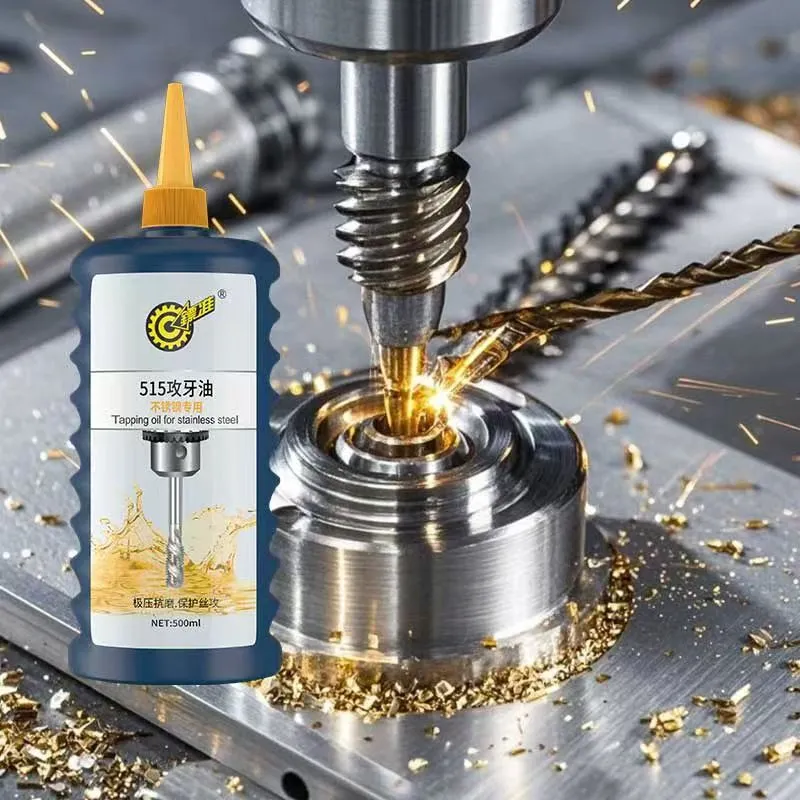
Stainless Steel Tapping Keeps Breaking Taps — How Can It Be Solved?
We have often received inquiries from customers asking:
Why do taps break so easily when tapping stainless steel? Is there an effective solution? What kind of lubricant should be used?
Stainless steel is a typical difficult-to-machine material. During tapping, it is prone to work hardening. When machining the pilot hole for threading, the cutting speed should not be too high (the recommended cutting speed is no more than 9 m/min). Excessive speed can easily cause work hardening, which significantly increases cutting resistance during tapping and leads to frequent tap breakage.
In addition, if the material has not undergone proper heat treatment, its poor machinability can also result in tap failure.
Another common cause is incorrect tapping oil selection. Insufficient lubrication during threading increases friction and torque, making tap breakage more likely.
Moreover, if the drilled hole diameter is too small, the tap will be subjected to excessive load and may fracture during operation.
When tapping problems occur, many users tend to reduce cutting speed and feed rate. While this lowers the pushing force on the tap, it also greatly compromises thread accuracy. As a result, surface roughness increases, thread diameter and precision become difficult to control, and burrs are inevitable.
On the other hand, an excessively high feed rate increases torque, which can also cause the tap to break.
To effectively solve the issue of tap breakage in stainless steel tapping, it is essential to use a dedicated stainless steel tapping oil formulated with extreme-pressure (EP) additives. This type of lubricant is specifically designed to meet the demanding lubrication requirements of stainless steel tapping.
Here, we recommend Biaozhun 515 Stainless Steel Tapping Oil — a professional tapping lubricant widely used by export-oriented manufacturing enterprises. It is specially developed for stainless steel tapping operations, providing excellent lubrication.
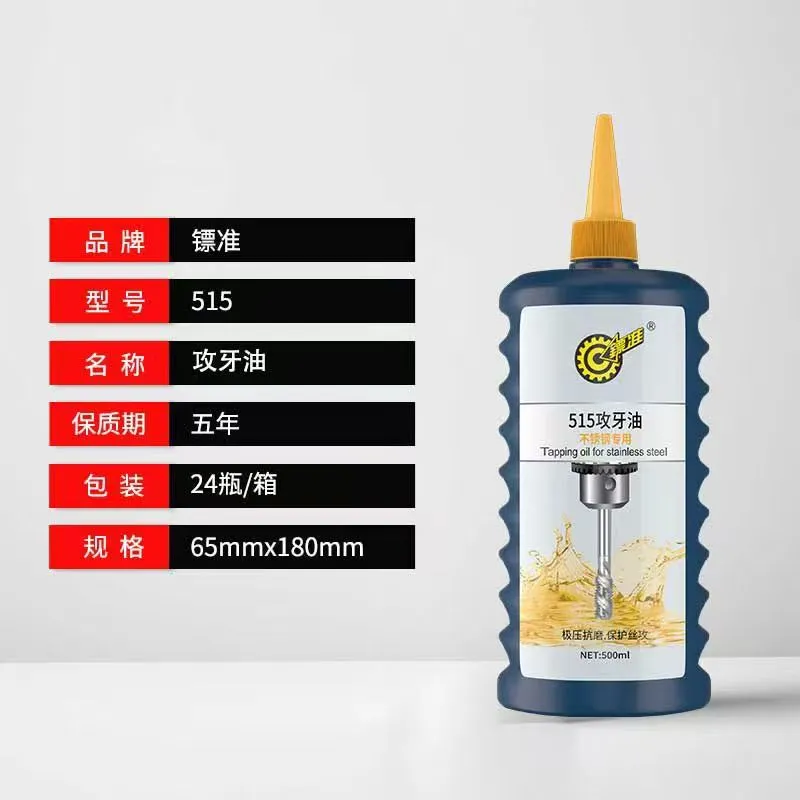
515 Stainless Steel Tapping Oil is a pure oil–based tapping lubricant formulated with a synergistic blend of active extreme-pressure (EP) additives and non-active EP additives. It delivers outstanding extreme-pressure and lubrication performance, meeting the demanding machining requirements of a wide range of difficult-to-machine materials.
This high-performance tapping oil effectively reduces tool wear, improves surface finish, and eliminates common machining defects encountered during tapping operations. Its excellent penetrating capability allows the lubricant to quickly reach the cutting edges of the tool, enhancing cutting efficiency and significantly extending tool life.
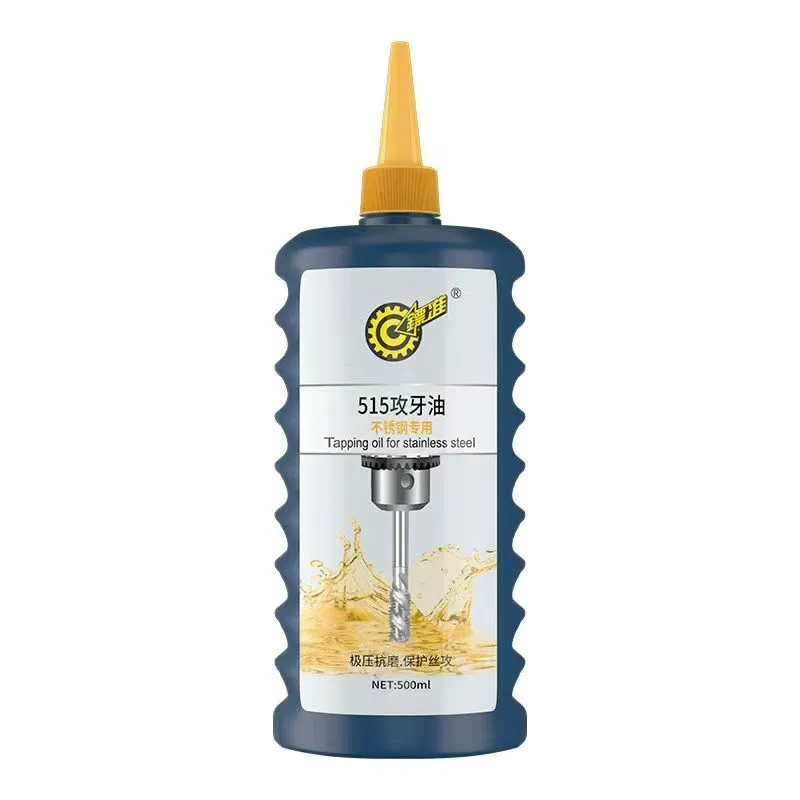
What Are the Benefits of Choosing the Right Tapping Oil?
1. Cooling
During tapping operations, tapping oil helps reduce heat buildup. As the tap cuts into the material, its temperature rises rapidly. Without proper cooling, the tap can be easily damaged, leading to a sharp decrease in tool strength and durability. Effective cooling helps maintain tool integrity and extends service life.
2. Lubrication
Without adequate lubrication, the threads produced during tapping tend to have rough and uneven surfaces. This significantly affects thread quality. Tapping oil provides effective lubrication, ensuring smoother cutting and cleaner, more precise threads.
3. Chip Removal
A large amount of metal chips is generated during tapping, especially when using cutting taps. These chips can easily adhere to the tap and remain inside the threaded hole. Tapping oil helps flush away chips in a timely manner, reducing clogging and improving overall machining efficiency.


